If you want to become a SOAR engineer, the path is clearer than most people make it sound. Security orchestration, automation, and response (SOAR) is one of the highest-leverage skills in cybersecurity right now, because every security team is drowning in alerts and looking for people who can automate the response. This guide walks through what a SOAR engineer actually does, the skills you need, the platforms and certifications that matter, and a realistic learning path you can start this week.
What a SOAR engineer actually does
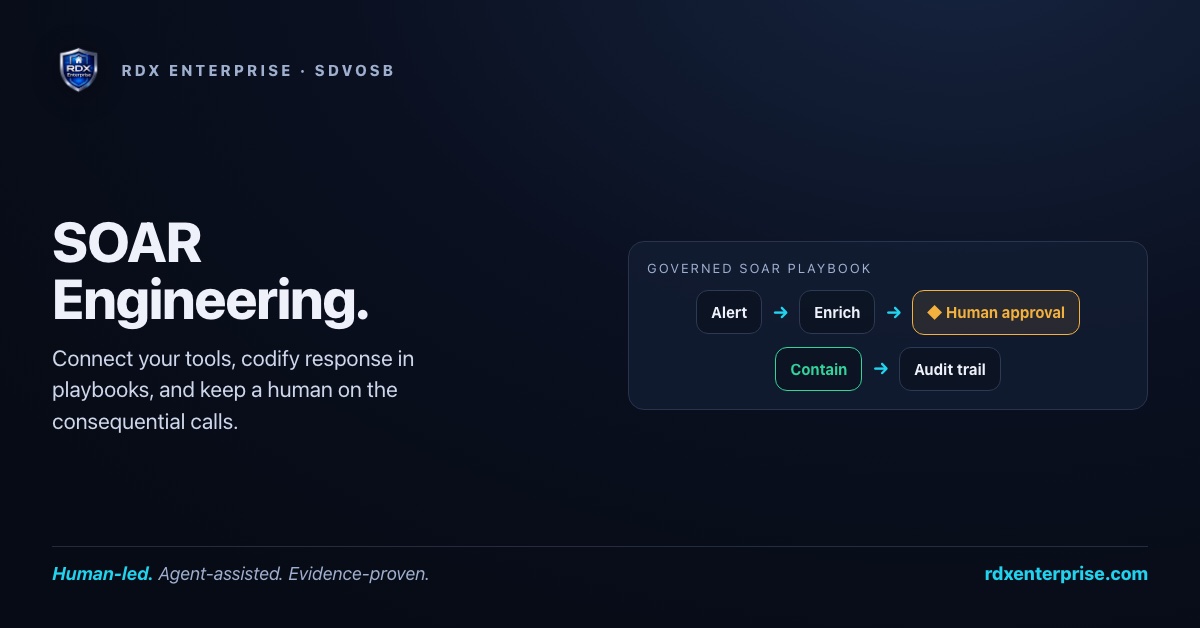
A SOAR engineer builds the automation that connects a security team’s tools and turns repetitive work into playbooks. When a phishing email lands, a SOAR playbook can pull the sender history, detonate the attachment in a sandbox, check which users received it, and stage the containment steps, all before an analyst even opens the ticket. The analyst then approves or corrects the action.
Day to day, the job looks like this:
- Design and build playbooks that automate detection, enrichment, and response.
- Integrate tools through APIs: the SIEM, EDR, email security, threat intelligence, ticketing, and identity systems.
- Write and maintain the scripts and logic that hold those integrations together.
- Tune, test, and version playbooks so they stay reliable as the environment changes.
- Keep a human in the loop on the actions that matter, so automation never runs blind.
It sits at the intersection of security operations and software engineering. You need to understand how attacks and incident response work, and you need to be comfortable writing code.
The skills you need
You do not need all of these on day one, but this is the target list.
Scripting, especially Python. Python is the lingua franca of security automation. You will use it for custom integrations, data parsing, and playbook logic. PowerShell helps in Windows-heavy environments.
APIs and data formats. Almost everything a SOAR engineer does is calling one tool’s API and passing the result to another. Get comfortable with REST APIs, JSON, authentication tokens, and reading API documentation.
Security operations fundamentals. You cannot automate a response you do not understand. Learn the incident response lifecycle, common attack types (phishing, ransomware, credential abuse), and how a SOC triages alerts.
SIEM and EDR familiarity. Splunk, Microsoft Sentinel, and the major EDR tools are the systems your playbooks will talk to. You do not need to be an expert in each, but you need to know what they produce and how to query them.
Playbook design thinking. The real skill is decomposing a messy human process into clear, testable steps with the right decision points and the right approval gates. This is where good SOAR engineers separate from the pack.
Cloud basics. Most environments are cloud or hybrid now. Understand how AWS and Azure handle identity, logging, and networking at a basic level.
The platforms that matter
Two platforms dominate hiring right now:
- Palo Alto Cortex XSOAR (formerly Demisto). The most widely deployed dedicated SOAR platform, with a large marketplace of integrations.
- Splunk SOAR (formerly Phantom). Common in Splunk-heavy shops.
Microsoft Sentinel’s automation rules and playbooks are also worth knowing if you work in an Azure environment. If you learn the concepts well on one platform, moving to another is mostly learning a new interface, not a new skill.
Certifications: helpful, not required
Certifications open doors, but employers hire SOAR engineers on demonstrated ability more than on paper. A sensible order:
- CompTIA Security+ if you are new to security. It proves the fundamentals.
- A platform certification (Palo Alto or Splunk) once you have hands-on time. This signals you can actually build.
- Broader credentials like CySA+ or, later, CISSP if you move toward leadership.
The most valuable thing you can show is a portfolio of playbooks you have built, even in a home lab.
A realistic learning path
Here is a path that works, assuming you can put in steady hours.
Weeks 1 to 4: fundamentals. Learn Python basics and the incident response lifecycle. Build small scripts that call a public API and parse the JSON. Read through real phishing and ransomware response procedures so you understand what you are automating.
Weeks 5 to 10: get on a platform. Spin up a free or trial SOAR environment. Build your first three playbooks: a phishing triage playbook, an alert enrichment playbook, and a simple containment workflow with an approval step. Break them, fix them, and document them.
Weeks 11 to 16: go deeper. Add real integrations. Handle errors and edge cases. Learn to test and version your work. Study how experienced engineers keep a human in the loop and capture an audit trail of every automated action, because that is what production environments and government customers require.
Ongoing: build a portfolio. Publish your playbooks (sanitized) to a repository. Write short explanations of what each one does and why. This portfolio is what gets you hired.
Common mistakes to avoid
- Automating before you understand the process. Bad automation is worse than none. Map the human workflow first.
- Ignoring the human-in-the-loop. Fully autonomous response sounds impressive and gets people fired. The best engineers design approval gates for consequential actions and keep evidence of every decision.
- Learning one platform’s buttons instead of the concepts. Buttons change. The underlying logic of orchestration does not.
- Skipping documentation and testing. Playbooks that nobody trusts do not get used.
How RDX Academy accelerates the path
Self-teaching works, but it is slow and full of dead ends. RDX Academy’s SOAR Engineer Program was built by practitioners who have led enterprise SOAR migrations and built playbooks that drove large-scale incident response in production and federal environments. Instead of piecing together tutorials, you learn to build real playbooks, integrate real tools, and design the human-in-the-loop approval and evidence patterns that production teams and government buyers actually require.
If you are serious about breaking into this field, a structured program shortens the timeline from a year of trial and error to a focused few months.
See the RDX Academy SOAR Engineer Program tiers and pricing on our Academy pricing page, and explore our SOAR engineering and automation services to see the kind of work this skill leads to.
Frequently asked questions
How long does it take to become a SOAR engineer? With steady effort, most people reach a hireable junior level in three to six months, especially if they already know some scripting or security. A structured program shortens that.
Do I need to know how to code to become a SOAR engineer? Yes, at least Python at a working level. You do not need to be a software developer, but you will write and read code every day.
Which SOAR platform should I learn first? Cortex XSOAR or Splunk SOAR, because they lead the job market. The concepts transfer between platforms.
Is SOAR engineering a good career in 2026? Yes. Alert volume keeps rising, security teams are understaffed, and automation-with-accountability is exactly where the field is heading. SOAR skills are in high demand and pay well.
Can I learn SOAR without a security background? You can, but plan to learn the security operations and incident response fundamentals alongside the automation. You cannot automate what you do not understand.